
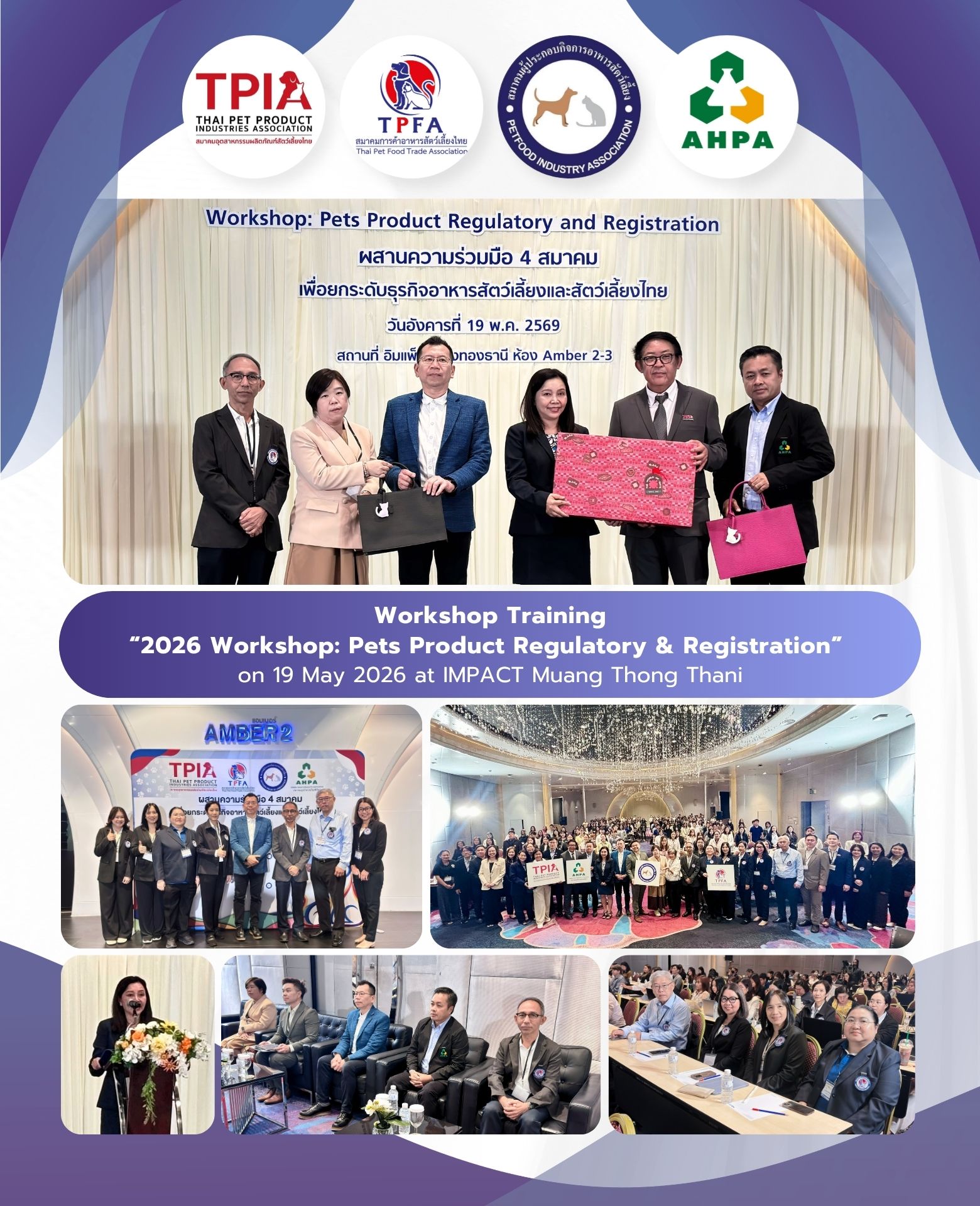
Workshop Training “2026 Workshop: Pets Product Regulatory & Registration”
The Thai Pet Food Trade Association (TPFA), in collaboration with the Petfood Industry Association (PIA), Thai Pet Products Industries Association (TPIA), Animal Health Products Association (AHPA), and the Bureau of Animal Feed and Veterinary Drugs Control (AFVC), together with the One Stop Service Center for Pet Food of the Department of Livestock Development (DLD), successfully organized the “2026 Workshop: Pets Product Regulatory & Registration” on 19 May 2026 at AMBER 2–3 Hall, IMPACT Muang Thong Thani.
The workshop was attended by nearly 300 participants from across the pet food industry, including representatives from 10 TPFA member companies totaling 31 delegates. The TPFA delegation was led by Mr. Woraveer, Secretary-General of TPFA and Chairman of the Technical Committee, together with Mr. Chatree, Association and Technical Committee Member; Ms. Chutima, Ms. Somsri, and Ms. Supawadee from the Technical Committee; Ms. Supattra, Director; as well as Ms. Anusara and Mr. Jirayu, association officers. The event was officially chaired by Dr. Sudarat Juejun, Director of AFVC.
The workshop aimed to enhance industry understanding of Thailand’s pet food regulations and product registration procedures, while also providing hands-on training on the actual electronic submission system. The initiative sought to reduce documentation errors and improve the efficiency of the regulatory approval process.
During the first session, officials from DLD delivered lectures covering key regulatory requirements for pet food products. Participants were informed that the Bureau of Animal Feed and Veterinary Drugs Control, under the Ministry of Agriculture and Cooperatives, serves as the regulatory authority overseeing animal feed and pet food in Thailand. Pet food products for dogs and cats are categorized as “specific controlled animal feed,” requiring mandatory product registration due to their implications for animal health and economic significance. The session also outlined the three categories of pet food products: complete and balanced pet food, snacks and treats, and therapeutic diets. In addition, participants learned how to identify the origin of products through the first two digits of Thailand’s 10-digit feed registration number, indicating domestic production, imports, or export-only products.
The workshop further addressed licensing procedures for pet food manufacturing and importation. DLD emphasized that manufacturing, import, and storage facilities must comply with GHP and HACCP standards, and that operators are required to obtain the relevant licenses prior to product registration. Participants also received guidance regarding license validity periods, renewal procedures, and the importance of timely renewal to avoid suspension of all product registrations under expired licenses. The use of the DLD electronic e-Service (e-Feed) platform was highlighted as a means to improve operational efficiency and reduce paper-based procedures.
Another key topic focused on the registration of premixes and feed supplements. DLD explained the definitions and regulatory classifications of premixes, additives, and supplementary feed materials, including proteins, fats, vitamins, and minerals. The session also clarified the categories of feed additives regulated by DLD, such as amino acids, preservatives, probiotics, and enzymes, while emphasizing important compliance considerations regarding product composition and claims.
The second session featured a practical workshop on pet food registration procedures. Participants received guidance on preparing consistent documentation, ensuring that product names in both Thai and English matched across all official documents, including licenses, Certificates of Formula (COF), Certificates of Analysis (COA), and product labels. DLD also explained product naming criteria based on ingredient composition, such as requirements for the use of tuna-related product claims.
Technical documentation requirements were also discussed in detail. Participants were advised that COF documentation must account for 100% of ingredients in the formulation. For canned and retort pouch products, Heat Penetration Test results with a minimum F₀ value of 3 minutes are required to ensure product safety. The workshop also addressed metabolizable energy (ME) calculations and the requirement to provide feeding guidelines based on pet body weight. For pet treats and snacks, labels must include the warning statement “Not a main meal” and should not exceed 15% of the pet’s daily energy requirements.
In addition, DLD provided clarification regarding procedures for returned goods. Operators are required to submit a formal request to DLD, after which AFVC will coordinate with the relevant animal quarantine station and seek authorization from the Director-General to transfer returned goods to a designated storage location selected by the operator. This process is intended to help reduce storage and handling costs at quarantine facilities. Subsequently, DLD or quarantine officials will inspect the returned products and verify the reasons for return. If no irregularities are found and the products comply with the Animal Feed Quality Control Act, the seizure order will be lifted, allowing the products to be released for normal distribution. However, if violations are identified, legal proceedings will be initiated in accordance with applicable regulations.